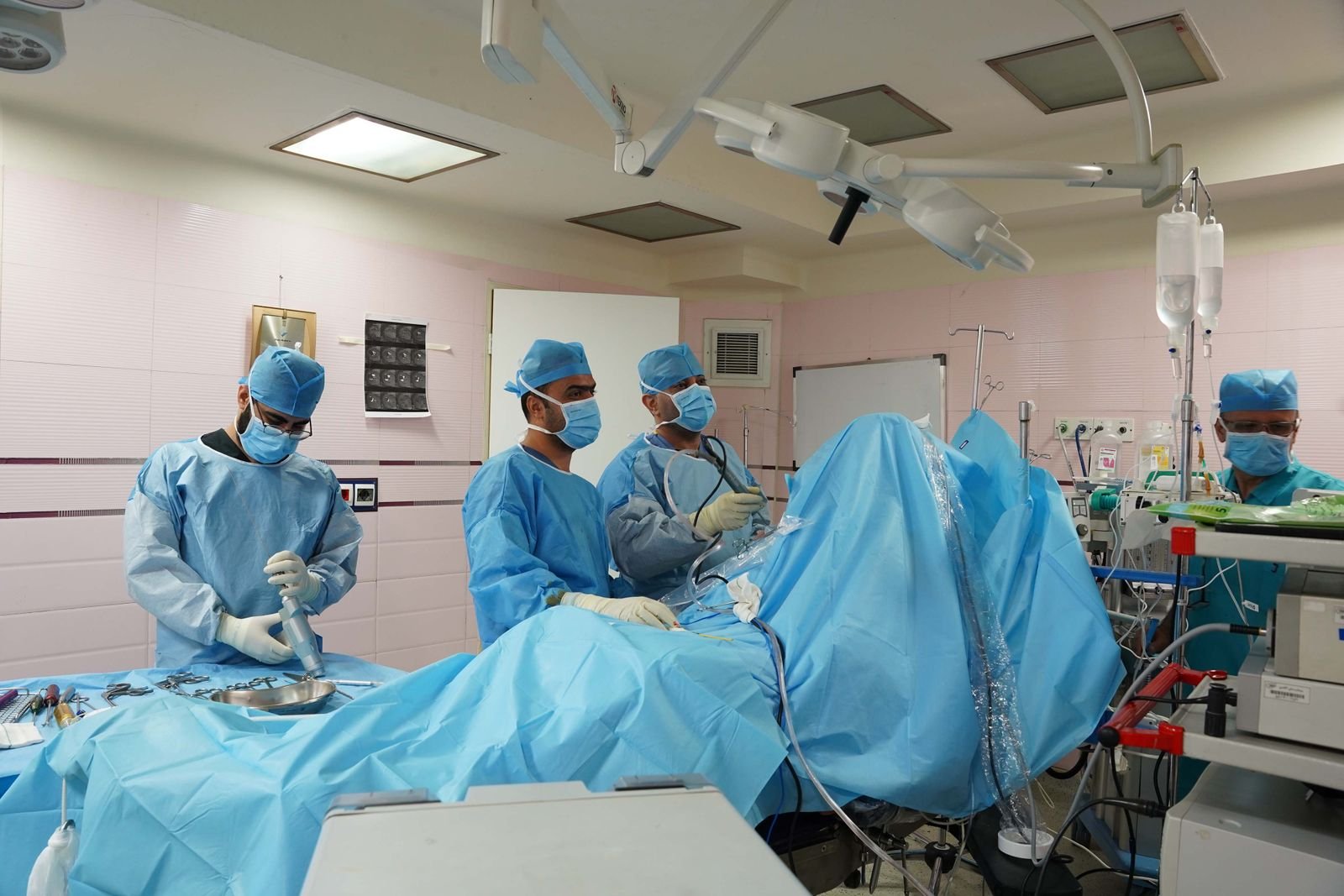
Which Urological Operations Can Be Performed with Single Port Robotic Surgery?
By Prof. Dr. Murat Binbay · Professor of Urology · Uro-oncology and Robotic Surgery · Istanbul · Reading time about 9 minutes
When patients first hear about single port robotic surgery, the question that follows is almost always the same: “Can my operation be done this way?” The answer depends on three things — the organ, the disease, and the patient. This guide explains, in plain language, which urological operations are performed with the single port system today, what each involves, and where the limits lie. It is written for patients and families, not for surgeons.
First, What “Single Port” Means
Conventional multi-port robotic surgery uses five or six small incisions across the abdomen, one for each robotic arm and the camera. The single port system — the da Vinci SP — places a camera and three working instruments through one incision of about 2.5 centimetres. Inside the body the instruments unfold and articulate like a wrist and elbow, allowing the surgeon to work in a confined space without the arms colliding.
The real difference is not the number of incisions but the route. Because everything enters through one point, the surgeon can reach the target organ directly — for example, the prostate through a small space just behind the pubic bone, or the kidney through the flank — without entering the abdominal cavity at all. The bowel is left untouched, the patient does not need to be tilted steeply head-down, and recovery tends to be gentler. For a side-by-side comparison of the two platforms in prostate surgery, see single port vs multi-port robotic prostatectomy.
An important point of balance: current scientific evidence shows that cancer control, continence recovery and complication rates are similar between single port and multi-port surgery when performed by experienced surgeons. Single port is not a better operation; it is a different route that suits some patients better.
Prostate Operations
Radical prostatectomy for prostate cancer
This is the operation for which single port surgery has been most widely adopted. The prostate and seminal vesicles are removed and the bladder is reconnected to the urethra. With the single port system this can be done through an extraperitoneal route (staying outside the abdominal cavity) or a transvesical route (through the bladder itself for small, favourable tumours).
What it means for the patient: one small incision below the navel, typically a one-night hospital stay, early return to eating, and less need for strong pain medication. Nerve-sparing to protect erectile function and lymph node sampling are both possible. Extended lymph node removal for high-risk disease is more comfortably performed with the multi-port system; this is discussed individually.
Who benefits most: patients with low- or intermediate-risk cancer, a normal-sized prostate, previous abdominal surgery (adhesions do not matter when the abdomen is not entered), obesity, or heart and lung conditions that make the steep head-down position risky.
Simple prostatectomy for benign enlargement
For very large benign prostates (typically above 80–100 ml), where laser or endoscopic methods are less suitable, the inner part of the gland can be removed robotically while the outer capsule is preserved. The single port route allows this through a single incision with minimal bleeding and a short catheter time.
Kidney Operations

Partial nephrectomy for kidney tumours
When a tumour is confined to one part of the kidney, the goal is to remove the tumour and preserve the rest of the organ. This is called partial nephrectomy, and preserving kidney function matters for the rest of the patient’s life.
The single port system allows the surgeon to approach the kidney through the flank (retroperitoneal route), reaching it from behind without disturbing the bowel. The tumour is removed, the kidney is repaired, and the patient typically goes home within one to two days. Tumour size, location and complexity decide whether single port is appropriate; small- to medium-sized tumours in accessible locations are the best candidates. We explain these operations in more detail in single-port robotic kidney surgery: what to expect.
Radical nephrectomy
When the whole kidney must be removed because of a large or centrally located tumour, the single port system can perform the operation through a single flank or abdominal incision. The kidney is removed through the same incision, slightly enlarged. For very large tumours or those involving major blood vessels, the multi-port system remains the more suitable platform.
Nephroureterectomy for upper urinary tract cancer
Cancer of the renal pelvis or ureter requires removal of the kidney together with the entire ureter and a cuff of bladder. Traditionally this meant two separate incisions or repositioning the patient during surgery. The single port system’s reach allows the whole operation — from kidney to bladder — through one incision without repositioning.
Pyeloplasty for ureteropelvic junction obstruction
A narrowing where the kidney meets the ureter causes pain and gradual kidney damage. Pyeloplasty reconstructs this junction. It is a delicate reconstructive operation performed in a small space, and the articulating instruments of the single port system are well suited to it. Patients are typically discharged the day after surgery.
Adrenal Gland Operations
Adrenalectomy
Hormone-producing or suspicious adrenal tumours are removed through a flank incision. The adrenal gland lies deep behind the abdominal organs; the retroperitoneal single port route reaches it directly without moving the liver, spleen or bowel. Recovery is usually rapid.
Bladder Operations
Radical cystectomy for bladder cancer
Removal of the bladder for invasive cancer, together with the construction of a new way to pass urine, is among the most complex operations in urology. It can be performed with the single port system in selected patients, including the construction of the urinary diversion inside the body. Because the operation is long and demanding, patient selection is strict and the choice between single port and multi-port is made case by case.
Partial cystectomy and diverticulectomy
Removal of a part of the bladder — for a localised tumour or a bladder diverticulum — is a shorter operation that suits the single port route well.
Reconstructive and Other Operations
- Ureteral reimplantation and ureteral reconstruction: repairing a narrowed or injured ureter and reconnecting it to the bladder.
- Sacrocolpopexy: repair of pelvic organ prolapse, usually performed together with gynaecology.
- Lymph node dissection: for prostate, bladder or testicular cancer, within the limits described above.
- Salvage surgery: operations after previous radiotherapy or focal therapy are technically demanding; the single port route is used selectively, and the decision requires detailed review of the prior treatment.
Summary Table: Single Port Operations in Urology
| Organ | Operation | Single port suitability | Notes |
|---|---|---|---|
| Prostate | Radical prostatectomy | Well established | Extraperitoneal or transvesical route; nerve-sparing possible |
| Prostate | Simple prostatectomy (BPH) | Well established | For very large glands |
| Kidney | Partial nephrectomy | Well established | Retroperitoneal route; depends on tumour complexity |
| Kidney | Radical nephrectomy | Suitable in selected cases | Very large tumours favour multi-port |
| Kidney / ureter | Nephroureterectomy | Suitable | Whole operation through one incision |
| Kidney | Pyeloplasty | Well suited | Reconstructive; short stay |
| Adrenal | Adrenalectomy | Well suited | Retroperitoneal route |
| Bladder | Radical cystectomy with diversion | Selected patients only | Complex; case-by-case decision |
| Bladder | Partial cystectomy, diverticulectomy | Suitable | Shorter operation |
| Ureter / pelvis | Reimplantation, reconstruction, sacrocolpopexy | Suitable | Articulating instruments help in confined spaces |
Who Is Not a Suitable Candidate?

Honest guidance includes the limits. Single port surgery is generally not the first choice when:
- the tumour is very large or involves major blood vessels;
- extensive lymph node removal is required and access would be restricted;
- the anatomy is unusually complex or there is extensive scarring in the target area;
- a multi-quadrant operation is needed that a single entry point cannot reach comfortably.
In these situations the multi-port system offers more working space and instrument strength. The right question is not “which robot is better” but “which route is safer for this operation in this patient”. A surgeon who uses both systems can answer that question without bias. If you would like to work through these factors yourself first, our single port candidate checklist organises them question by question.
How the Decision Is Made in Our Practice
Every patient’s imaging is reviewed in detail before any recommendation. We consider the disease (stage, size, location), the anatomy (organ size, previous operations, body habitus) and the patient’s general health. Both systems are available to us, and the choice is explained to the patient in writing, with the reasons. International patients can have this review done remotely before travelling. You can read more about patient selection in SP robotic surgery: clinical advantages and patient selection.
Frequently Asked Questions
Is single port surgery safe?
Current scientific evidence shows safety and cancer outcomes comparable to multi-port robotic surgery in experienced hands. The main differences are in recovery, not in safety.
Does single port mean a shorter hospital stay?
Often, yes. Many prostate and kidney patients go home the day after surgery; some the same day. The exact stay depends on the operation and the patient.
Will I have less pain?
Most patients report less pain and need fewer strong painkillers, mainly because the abdominal cavity is not entered and there is a single small incision.
Can single port surgery be done if I have had previous abdominal operations?
Frequently, yes — and this is one of its clearest advantages, because the extraperitoneal and retroperitoneal routes avoid old adhesions.
Is the operation longer?
Operating times are broadly similar to multi-port surgery once the surgeon is experienced with the system.
How do I find out whether my operation can be done with single port?
Send us your imaging and reports. You will receive a written assessment of the options, including whether single port is appropriate for you.
Send Your Scans for Assessment
If you have been diagnosed with a prostate, kidney, adrenal or bladder condition and would like to know whether single port robotic surgery is an option for you, you can send your imaging and reports for a preliminary review. We reply within two business days with a written assessment and the next steps. Tel: +90 530 100 90 85
This article is for general information only and does not replace an individual medical consultation. Treatment decisions are made after a personal assessment with your surgeon.