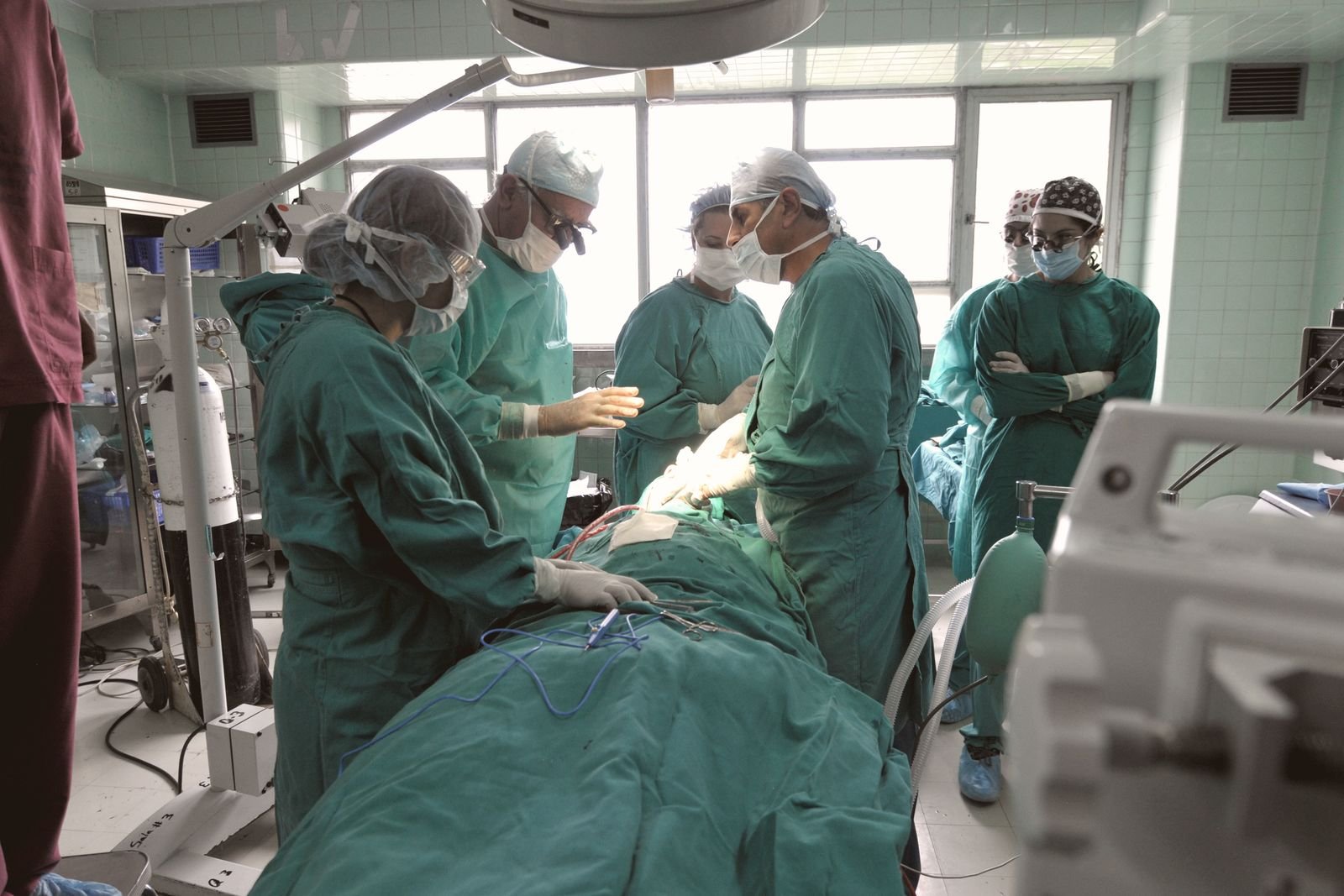
Transvesical Single Port Prostatectomy: Who Is It For?
By Prof. Dr. Murat Binbay · Professor of Urology · Uro-oncology and Robotic Surgery · Istanbul · Reading time about 9 minutes
Some of the men who write to me have been told that surgery will be difficult for them. They have had three abdominal operations, or a hernia repaired with mesh on both sides, or a heart that their anaesthetist would rather not tilt head-down for three hours. Others have no such problem at all; they simply want the operation that disturbs the least and returns them to their lives soonest. For both groups there is now a route to the prostate that did not exist a few years ago: through the bladder itself. This page explains what that transvesical route means, who it is for, and — just as plainly — who it is not for.
The Transvesical Idea in One Paragraph
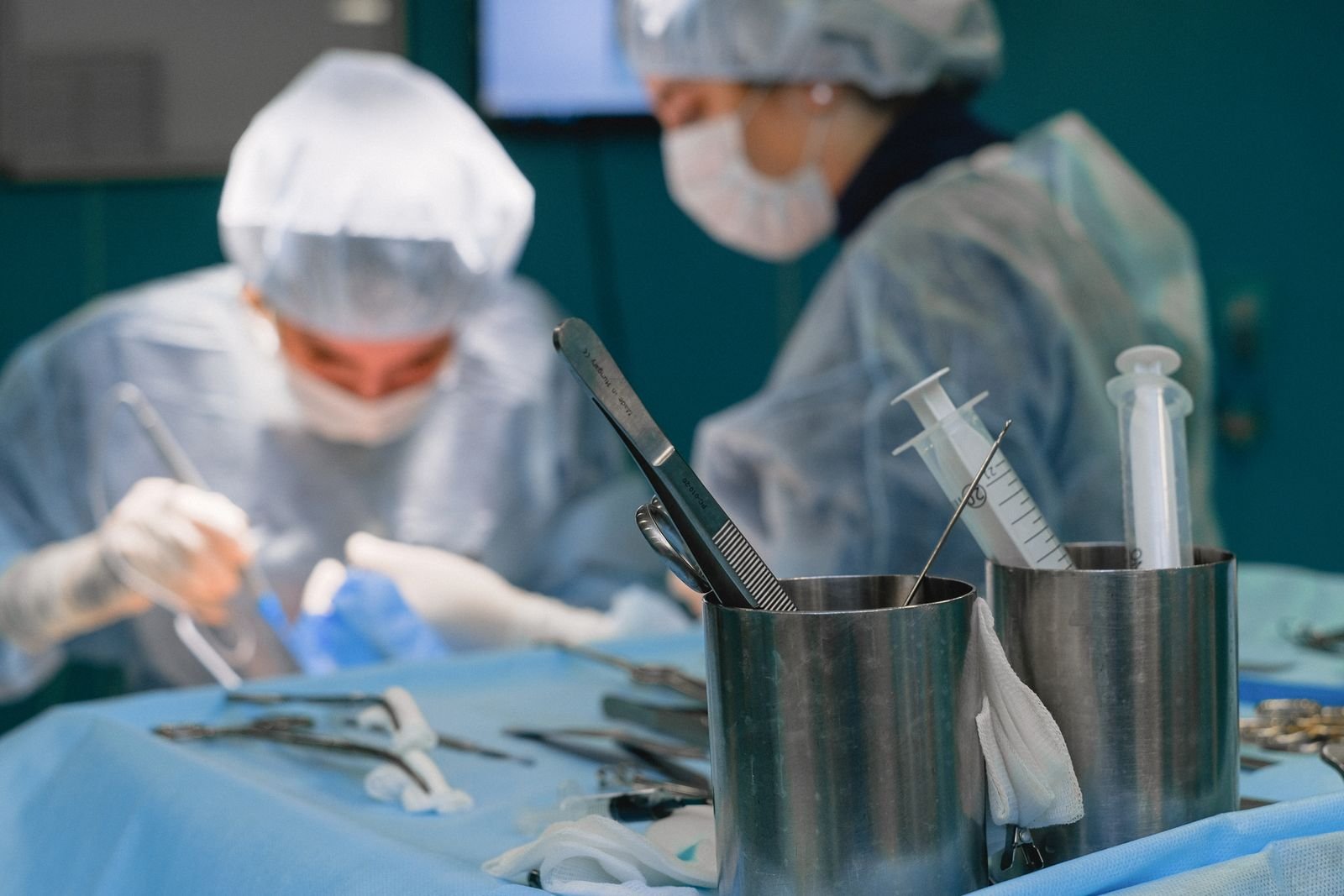
Every other way of removing the prostate begins by getting to it: through the abdomen, past the bowel, or down through the space in front of the bladder. The transvesical route skips that journey. A single incision of about three centimetres is made low on the abdomen, just above the pubic bone, and opens directly into the bladder. The bladder is gently filled with gas and becomes the operating room. The prostate, which sits at the bladder’s exit, is removed from the inside. The bladder is then joined to the urethra and closed. Nothing else is entered, and nothing else is moved.
Think of it as reaching a room through the door that already leads to it, rather than taking down a wall to get in.
What This Changes for You
The advantages follow directly from what is left untouched.
- The abdomen is never entered. The bowel is not handled and old scar tissue from previous operations is never encountered. Eating and bowel function return almost immediately.
- You lie flat. There is no steep head-down position and the gas pressure used is low, because only the bladder is inflated. For men with heart or lung disease, glaucoma or a high body weight, this removes the main source of anaesthetic strain.
- The tissues that support urinary control stay in place. The structures in front of and around the bladder, which other routes must divide to reach the prostate, are not disturbed. This is the reason early return of continence is the most consistently reported feature of this operation.
- Very little pain. One small incision, no stretching of the abdominal wall, no irritation of the lining of the abdomen. Most men need only simple pain relief.
- A short stay and a short catheter. In our practice patients are typically discharged the same day or the following morning, and the catheter is removed after three to seven days.
The general advantages of the single port platform for prostate cancer are described in the advantages of single port robotic surgery for prostate cancer.
What the Published Transvesical Series Report
The figures below are not ours. They come from the largest published experience of transvesical single port radical prostatectomy, from the centre that developed the technique, as summarised in the peer-reviewed literature. We quote them so that you can see what the operation has achieved elsewhere and judge our recommendation against it.
| Measure | Reported result |
|---|---|
| Discharged within 24 hours | 92% of patients (median stay under six hours) |
| Catheter duration | Median three days |
| Continent immediately after catheter removal | 49% |
| Continent at three months | 87% |
| Continent at twelve months | 99% |
| Patients with previous abdominal surgery | 49% of the series |
| Conversions or additional ports | None |
These are results from a highly experienced centre in carefully selected patients. They show what is possible, not what is promised.
Who Is the Transvesical Route For?

The transvesical route is not for every man with prostate cancer. It is for the right man with the right cancer. In practice there are five groups.
1. Men whose cancer is confined and favourable
Low-risk and intermediate-risk cancer, contained within the prostate on MRI, where extensive removal of lymph nodes is not required. This is the heart of the indication. If your Gleason score is 3+3 or 3+4, your PSA is below 10 to 15, and your MRI shows no extension beyond the capsule, you may well be a candidate.
2. Men with a “hostile” abdomen
Multiple previous abdominal operations, bowel surgery, extensive hernia repairs with mesh, a previous kidney transplant, peritoneal dialysis, a stoma. For these men conventional robotic surgery means working through dense scar tissue, with real risk to the bowel. The transvesical route passes none of it. In the largest published series, half the patients had previous abdominal surgery — not by coincidence, but because this is exactly whom the operation serves.
3. Men for whom anaesthesia is the main concern
Significant heart disease, chronic lung disease, sleep apnoea, glaucoma, a high body mass index. Some of these men have been told elsewhere that robotic surgery is too risky. Often the risk lay in the position and the pressure, not in the operation. Remove both, and the answer can change.
4. Men for whom early continence and a fast return matter most
The surgeon, the pilot, the executive, the man who simply cannot face months of pads. No operation can guarantee immediate dryness, but this route gives the best starting conditions for it, and the shortest time with a catheter.
5. Men with a very large benign prostate
The same route is used for benign enlargement when the gland is too large for laser or endoscopic treatment. The obstructing inner part of the prostate is removed through the bladder while the outer capsule is preserved. In a published three-centre series of men with very large glands, complications were few and many patients went home the same day.
Who Is It Not For?
I would rather tell you this now than after you have travelled.
- High-risk cancer. A Gleason score of 8 or more, a PSA above 20, or cancer that has clearly extended beyond the capsule or into the seminal vesicles. These men need a wider operation with extended removal of lymph nodes, and that is better done by another route — usually with the multi-port system.
- Cancer whose position demands a wider margin. Where the MRI shows the tumour pressing on the capsule over a broad front, or lying where a wider dissection is needed, the route is chosen by the tumour, not by preference.
- A small, scarred or diseased bladder. The bladder is the working space. If it has been shrunk by previous pelvic radiotherapy or long-standing disease, there is not enough room to operate safely.
- Previous radiotherapy to the prostate. Salvage surgery is a different operation with different risks, and is assessed individually.
- An exceptionally large gland in the setting of cancer. Experience has extended the limit considerably, but beyond about 100–150 ml another route may be safer.
If you fall into one of these groups, you have not lost the benefits of robotic surgery. You have simply been directed to the route that will treat your cancer completely. We use both robotic systems and several routes for exactly this reason; see single port vs multi-port robotic prostatectomy.
Nerve-Sparing Through the Bladder
Men often assume that a smaller operation means less precision. The reverse is true here. Working from inside, the camera sits immediately behind the prostate, and the nerve bundles that control erection are approached from an angle that disturbs them very little. Nerve-sparing is planned side by side from your MRI and biopsy map, exactly as with any other route, and the same rule applies: the nerve is spared wherever the cancer allows it, and never where it does not. The factors behind that decision are explained in nerve-sparing in single port prostatectomy.
What to Expect, Step by Step
- Before you travel. You send your MRI images, biopsy report and PSA history. Within two business days you receive a written assessment stating whether the transvesical route is suitable for you, and why.
- A video consultation. We discuss the plan, your questions and your priorities.
- The day before. Pre-operative assessment at the hospital in Istanbul; you meet the anaesthetist.
- The operation. General anaesthesia, lying flat, about two to three hours.
- The same evening. You eat, you walk, and in many cases you leave the hospital that day or the next morning.
- The following days. You stay in Istanbul until the catheter is removed, typically three to seven days after surgery.
- Home. Follow-up continues remotely: PSA results, continence and recovery are reviewed through scheduled consultations and the patient app.
A broader picture of the weeks after prostate surgery is given in how long recovery takes after robotic prostate surgery.
The Honest Part
Three things you should know before you decide.
This is a young operation. It was introduced at the start of this decade. The results so far are strong, but they come from a small number of expert centres and from carefully chosen patients, and long-term cancer follow-up is still shorter than for the conventional approaches. We offer it where the evidence supports it, not beyond.
Selection is everything. The same operation that serves a man with a contained, favourable cancer would under-treat a man with high-risk disease. A surgeon who offers the transvesical route to everyone is offering it to people it will fail.
The cancer comes first. Speed of recovery, a short catheter, a single small scar — these are real benefits, and none of them is worth a cancer incompletely removed. If your scans tell us that another route is safer, that is the route we will recommend, in writing, with the reasons.
Frequently Asked Questions
Is opening the bladder harmful?
No. The bladder heals quickly and reliably, and it is opened and closed routinely in urological surgery. The opening is small and is closed in layers at the end of the operation.
Will I be continent straight away?
Some men are, and the chances are better with this route than with most. But continence returns over weeks in many patients, and nobody can promise the first day.
Can lymph nodes be removed?
A limited sampling of lymph nodes is possible. If your cancer requires extended removal, another route is more appropriate.
I have had several abdominal operations and was told surgery would be risky. Could this be an option?
Very possibly. This is one of the clearest reasons for the transvesical route. Send your operation notes together with your scans.
Is the cancer result as good as with conventional robotic surgery?
In properly selected patients, published results are comparable. This is exactly why selection matters, and why we review your MRI before recommending anything.
How long will I need to stay in Istanbul?
Usually seven to ten days in total, which covers the assessment, the operation and catheter removal.
Find Out Whether the Transvesical Route Is Open to You
Most men cannot tell from their own reports whether they are candidates for the transvesical route. We can, usually within two days of seeing your scans. Send your MRI images, biopsy report, PSA history and a list of previous operations. You will receive a written answer: whether the transvesical route is suitable, what we would recommend if it is not, and what the next step is. There is no obligation, and the letter is yours to show to any other surgeon.
If you have been told that surgery will be difficult for you, this is the letter worth asking for. Tel: +90 530 100 90 85
This article is for general information only and does not replace an individual medical consultation. Treatment decisions are made after a personal assessment with your surgeon.